
The record assembles itself. The oncologist reviews it.
Saltgrass AI is a clinical intelligence platform built for oncology. Synopsis, its first product, turns a decade of scattered records into a single decision-ready summary — and it is live in production at MUSC Hollings Cancer Center.
- Canonical FHIR R4
- HIPAA-compliant architecture
- Live at MUSC Hollings
Interface shown with synthetic data.
Before anyone can make a decision, someone has to read all of it.
A new oncology patient arrives with a decade of history, scattered across outside records, scanned faxes, pathology reports and imaging from four different systems.
Hours of chart abstraction go into every new-patient visit, every tumor board and every prior authorization. It delays treatment, and it consumes the most expensive time in the health system.
The same unread record, at every point along the patient journey.
Above the electronic health record, not in place of it.
Saltgrass AI ingests, normalizes and reasons over patient data through a canonical FHIR R4 model inside a HIPAA-compliant architecture. It reads from the systems a cancer program already runs, and returns the structure those systems were never designed to produce.
Products
- Canonical FHIR R4 model
- SMART on FHIR
- HIPAA-compliant architecture
Synopsis is the first product on the platform.
It turns a fragmented longitudinal record into a single, decision-ready oncology summary — organized the way an oncologist actually reads a chart.
The record as it actually exists
Synopsis takes structured data, unstructured notes and scanned documents in whatever form the record arrives, applying optical character recognition to anything that is not already machine-readable.
One clean model of the patient
Synopsis separates that material into clinically meaningful documents, resolves duplicates and conflicts, and maps each element into the platform's canonical data model.
- Condition Diagnosis & staging
- Observation Biomarkers & labs
- DiagnosticReport Pathology & imaging
- MedicationStatement Treatment history
- Procedure Surgical history
Clinically governed reasoning
Large language models, governed by clinically authored prompts and schemas, extract what matters in oncology. The clinical logic is written by oncologists, not inferred by the model.
- Diagnosis & staging
- Pathology & biomarkers
- Treatment history
- Imaging & response
- Open questions
Every assertion traceable to source
The result is returned as a structured summary and a clinical timeline, with every assertion traceable back to the source document it came from.
Select any line in the summary to see where it came from.
Live at MUSC Hollings Cancer Center
- The cancer program of the Medical University of South Carolina, a top-tier academic medical center.
- Ranked No. 1 in South Carolina for cancer care, 2026–2027.
- The only NCI-designated cancer center in South Carolina.
Synopsis is in production there today.
Chart preparation that consumed most of a morning is ready before clinic starts.
The clinician's role shifts from assembling the record to reviewing it.
Before
Assembling the record
Sources pulled, read and abstracted by hand ahead of every encounter.
With Synopsis
Reviewing it
A structured summary, ready before clinic starts.
| Task | Before | With Synopsis | Reduction |
|---|---|---|---|
| Chart creation | 70 min | 10 min | 86% |
| Summary review | 60 min | 15 min | 75% |
| Prior-authorization documentation | 45 min | 20 min | 56% |
| Per new-patient encounter | 175 min | 45 min | 74% |
Figures observed in production use at MUSC Hollings Cancer Center.
A defensible position, from the clinic outward.
The technology was not built to demonstrate what a model can do. It was built inside a cancer program, to solve a problem that program had.
-
Exclusively licensed core technology
The core summarization and harmonization technology originated in clinical practice at MUSC and is exclusively licensed to Saltgrass AI by the Zucker Institute for Innovation Commercialization.
-
Platform data models and infrastructure
The canonical FHIR R4 data model, the ingestion and harmonization pipeline, and the HIPAA-compliant architecture every product runs on.
-
Clinical logic built on top
Indication-specific prompts, schemas and output structures authored by practising oncologists, and the provenance layer that ties each assertion to its source.
Together, these form the company's intellectual property position.
One platform, one patient model, more than one product.
Once the record is harmonized, the same clinical data model serves the workflows that surround it.
-
Live
Synopsis
Decision-ready oncology summaries and clinical timelines, traceable to source.
-
On the roadmap
Prior authorization
Payer-ready documentation assembled from the same harmonized record.
-
On the roadmap
Clinical trial matching and enrollment
Structured eligibility signals surfaced at the point the decision is made.
-
On the roadmap
Federated data services
Research-grade oncology data, harmonized across institutions.
About us
Built by clinicians and operators, inside a cancer program.
Saltgrass AI began with a team of clinicians at the Medical University of South Carolina, led by Dr. Kevin Hughes, who set out to reduce the administrative burden on oncologists while improving clinical efficiency, quality and throughput.
Their idea was to automate the manual review of faxed documents and patient charts — work that had required hours of human interpretation and was prone to error — and produce an accurate, structured summary that prepares physicians for a first-time patient encounter. That work now supports MUSC’s Next Day Access program and speeds time-to-treatment across Hollings Cancer Center.
Today the company pairs that clinical origin with operators who have scaled healthcare and data companies through IPOs, acquisitions and enterprise-wide AI adoption, with one aim: make healthcare intelligence usable, so clinicians can act on it with confidence.
-
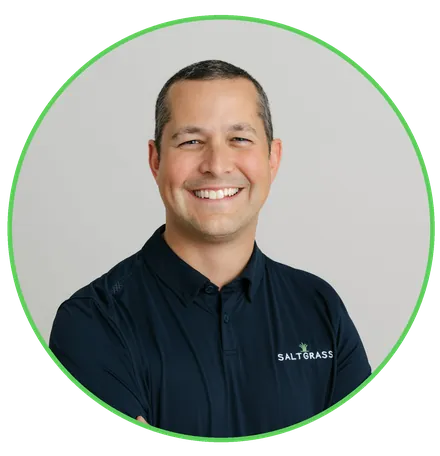
Robert Goodman
Chief Executive Officer
Robert has spent more than 20 years leading AI, data and digital health transformation, taking enterprise-scale AI from strategy to production and guiding companies through IPOs and private-equity exits.
- Chief Data & AI Officer at Blue Cross Blue Shield of Minnesota, embedding AI enterprise-wide and partnering to launch Xcelerate Health
- Global VP of Analytics at Ellucian, leading the data overhaul behind its $5B+ private-equity sale
- Built Deloitte’s Insight Studio, a national AI innovation hub serving Fortune 500 clients
- Helped scale Blackbaud through its NASDAQ IPO
-
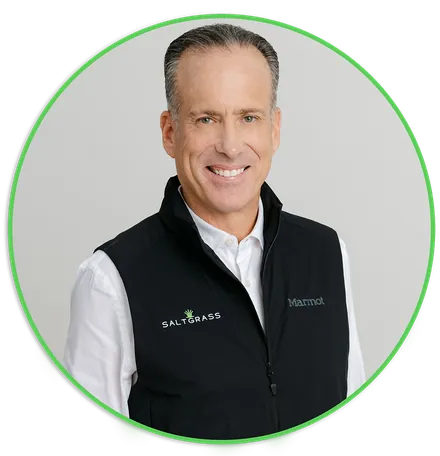
Brian Litten
Board of Directors · Healthcare Industry Advisor
Brian brings more than 25 years shaping digital health, value-based care and healthcare AI. He is a proven operator who has led IPOs, M&A and high-value growth outcomes.
- Scaled Tabula Rasa HealthCare from startup to $300M+ in recurring revenue and a NASDAQ IPO
- Delivered $62M+ in first contracts and $100M+ in post-IPO growth deals
- Founded and led a company through its exit to a Fortune 100 acquirer
- Turned around Swift Medical with a $13M bridge raise and technology reboot
-
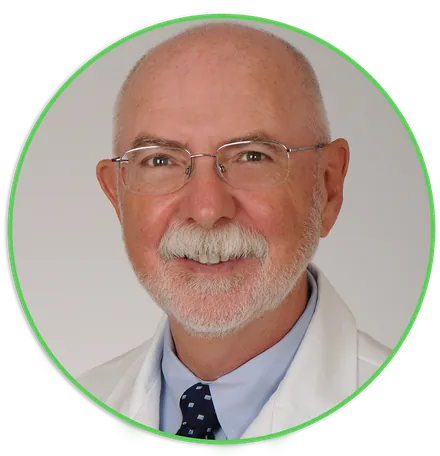
Dr. Kevin Hughes
Board of Directors · Clinical Advisor
Dr. Hughes is Director of Cancer Genetics at MUSC and led the team of clinicians from which Synopsis originated. He has spent more than 30 years leading breast cancer diagnosis, treatment and clinical research.
- Former Massachusetts General Hospital breast surgeon and Co-Director of the Avon Breast Center; Professor Emeritus, Harvard Medical School
- International expert in hereditary breast cancer and the clinical use of genetic testing
- Recognized for minimal-intervention, precision approaches that improve outcomes and early detection
- Co-founder of CRA Health, acquired by Volpara
Improving clinical outcomes for oncology.
Saltgrass AI works with cancer programs that want their clinicians reading the record instead of assembling it. Briefings cover the platform architecture, the MUSC deployment and what a first indication looks like at your institution.